Nozawa Onsen
Overview
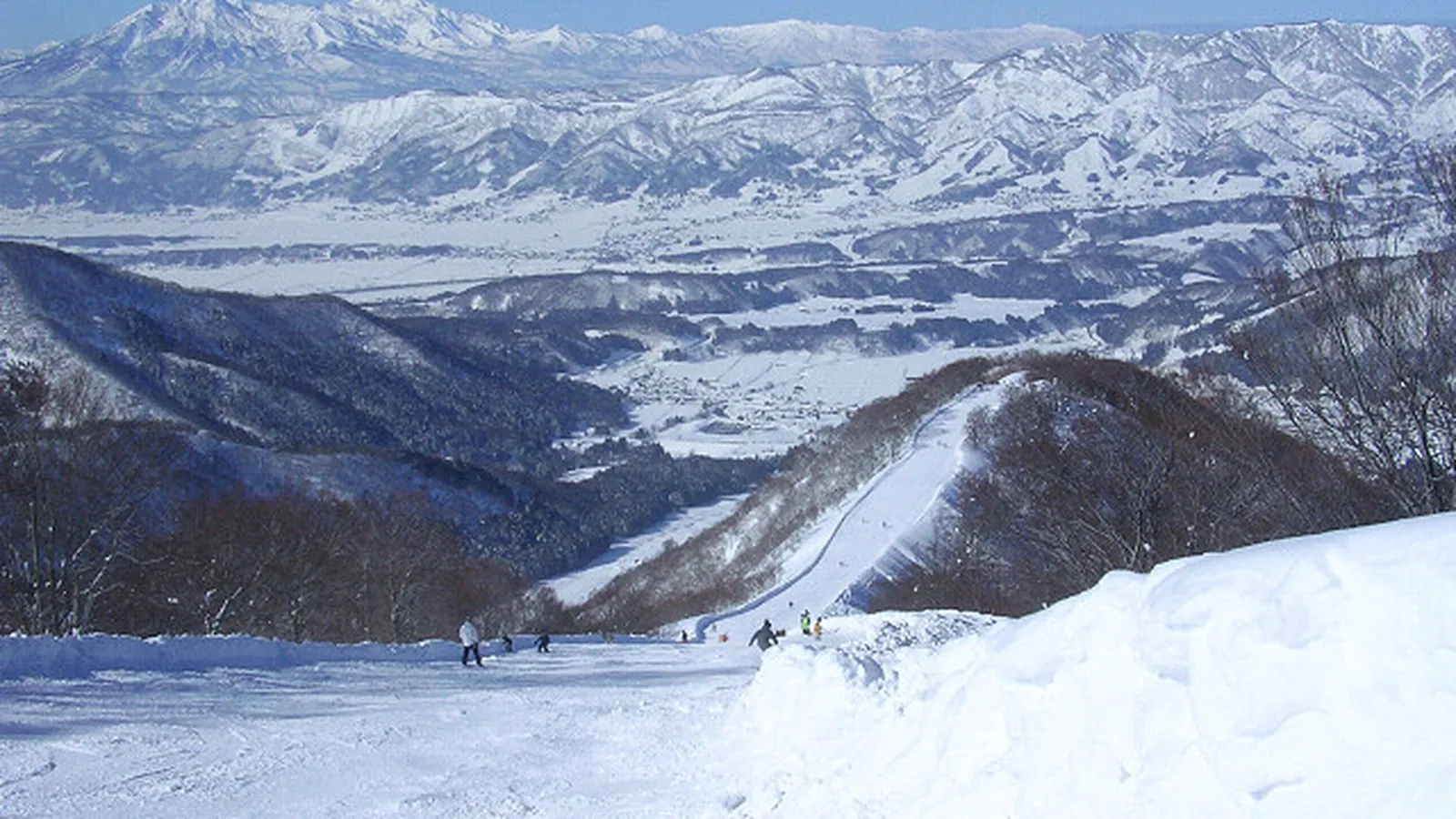
Nozawa Onsen sits in northern Nagano Prefecture, built into a working hot-spring town rather than around a standalone base area. Skiers arrive to find narrow streets lined with ryokan, public bathhouses, and shops a short walk from the lift lines, so a soak in a thermal bath between runs is part of the routine rather than an add-on. The resort opened more than 70 years ago, making it one of the more established ski areas in this part of Japan, and the town’s onsen culture has grown up alongside it rather than being added later for tourists.
The mountain itself rises from a base of 565.3 meters to a summit of 1,643.9 meters, a vertical drop of 1,078.6 meters served by 17 lifts: two gondolas, 14 chairlifts, and a magic carpet for the beginner slopes near the village. Across 55 marked runs totaling 41.91 kilometers, the terrain splits close to evenly among difficulty levels, with roughly 17.15 kilometers rated easy, 12.88 kilometers intermediate, and 11.89 kilometers advanced. That balance gives Nozawa Onsen a broader spread of terrain than many smaller resorts nearby, where one difficulty level tends to dominate. Above the village, the Nagasaka Gondola climbs to the Uenotaira plateau, opening up higher alpine terrain for skiers looking to get away from the lower-mountain runs closest to town.
Nozawa Onsen also carries a piece of Olympic history: during the 1998 Nagano Winter Olympics, its southern slopes hosted the biathlon competitions, with two 4-kilometer trails and a 30-station shooting range built into that section of the mountain. Traces of that Olympic-era layout remain part of the terrain today, distinguishing Nozawa Onsen from resorts without any competitive pedigree.
Getting to Nozawa Onsen means routing through one of several regional airports rather than a single obvious gateway. Shinshu-Matsumoto Airport is closest at 96.3 kilometers, with Toyama Kitokito Airport at 117.4 kilometers and the larger Niigata Airport, the main regional hub, at 128.8 kilometers. By road or rail, Jōetsu is the nearest city of note at 32.7 kilometers, with Nagano city at 38.7 kilometers and Ueda a bit further at 59.4 kilometers. Nozawa Onsen doesn’t currently appear on any of the major multi-resort lift passes, so visitors buy day tickets or a resort pass straight from the ticket window rather than through a bundled product.
What distinguishes the experience most is the town itself. This is a resort where apres-ski means a centuries-old public bathhouse rather than a purpose-built lodge bar, where the Yamabiko Festival and other seasonal events animate the streets through winter, and where the ski area and the community it sits inside feel like one continuous place rather than a resort dropped onto a mountainside.
Key stats
Official website — Last checked 2026-09-13
Lifts by type
| Type | Count |
|---|---|
| gondola | 2 |
| chair lift | 14 |
| magic carpet | 1 |
Runs by difficulty
| Difficulty | Distance |
|---|---|
| easy | 17.15 km |
| advanced | 11.89 km |
| intermediate | 12.88 km |
Maps
View official Nozawa Onsen trail map (PDF) →
Run & lift overview
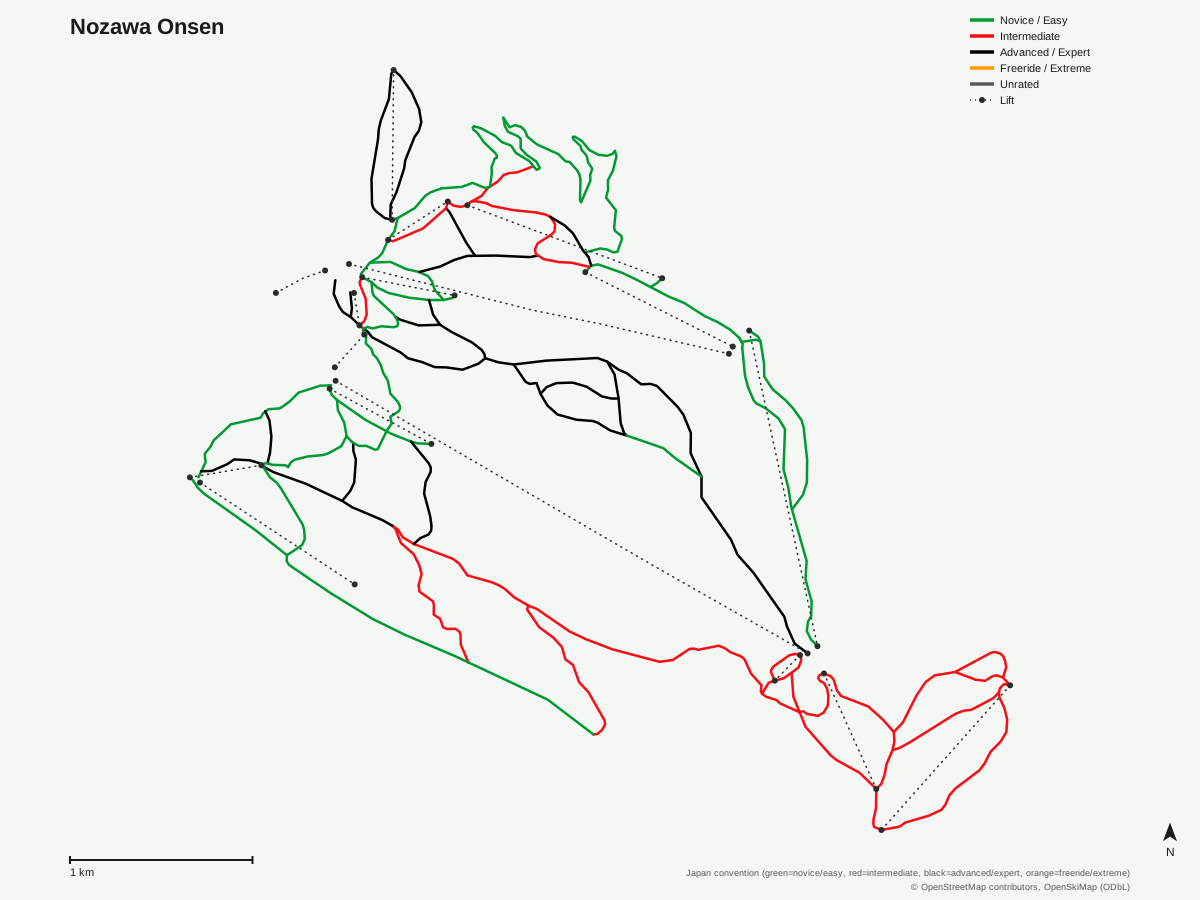
Nozawa Onsen: 55 runs, 17 lifts. Drawn from OpenStreetMap run and lift data — not the official Nozawa Onsen trail map. © OpenStreetMap contributors, OpenSkiMap (ODbL).
Typical conditions by month
Monthly conditions data for Nozawa Onsen is not yet available.
Lift tickets & passes
Nozawa Onsen has no multi-resort pass affiliations on record.
Getting there
Nearest airports
- Shinshu-Matsumoto Airport (MMJ) — 96.3 km straight-line
- Toyama Kitokito Airport (TOY) — 117.4 km straight-line
- Sado Airport (SDS) — 127.2 km straight-line
Nearest cities
- Jōetsu, Niigata — 32.7 km straight-line
- Nagano, Nagano — 38.7 km straight-line
- Ueda, Nagano — 59.4 km straight-line
Also covered by
Where to stay
A dedicated lodging guide for Nozawa Onsen is not yet available.
Nearby resorts
- Togari Onsen Ski Resort — 8 km straight-line, 458.3 m vertical
- Kijimadaira Ski Resort — 12 km straight-line, 385.6 m vertical
- Makinoiri Kogen Snow Park — 13 km straight-line, 242.2 m vertical
- Sakae Club Ski Area — 13 km straight-line, 404.1 m vertical
- Kitashiga Komaruyama Ski Resort — 14 km straight-line, 315.5 m vertical
FAQ
- How big is Nozawa Onsen?
- Nozawa Onsen has a vertical drop of 1,078.6 meters, from a base of 565.3 meters up to 1,643.9 meters, spread across 55 runs and 41.91 kilometers of marked terrain. Seventeen lifts move skiers around the mountain, including two gondolas, 14 chairlifts, and a magic carpet for the beginner area.
- Is Nozawa Onsen good for beginners?
- Yes: of the 41.91 kilometers of runs, about 17.15 kilometers are rated easy, the largest single category on the mountain, and a magic carpet serves the learner slopes near the village. The Uenotaira plateau, reached by the Nagasaka Gondola, also offers gentler, wide-open terrain away from the steeper lower-mountain runs.
- Is Nozawa Onsen good for advanced skiers?
- There is a genuine advanced share of the mountain, with 11.89 kilometers of runs rated advanced against 12.88 kilometers intermediate, so the terrain splits fairly evenly rather than favoring one level heavily. That balance, on top of the resort's 1,078.6-meter vertical, gives stronger skiers real terrain to work with rather than a token black run or two.
- What makes Nozawa Onsen different from other Nagano resorts?
- Nozawa Onsen is built into a working hot-spring town rather than a purpose-built base area, so narrow streets, ryokan, and public bathhouses sit within walking distance of the lift lines. The resort opened more than 70 years ago, and its southern slopes hosted the biathlon events of the 1998 Nagano Winter Olympics, with two 4-kilometer trails and a 30-station shooting range built into that section.
- What is the nearest airport to Nozawa Onsen?
- Shinshu-Matsumoto Airport is the closest at 96.3 kilometers, followed by Toyama Kitokito Airport at 117.4 kilometers. Niigata Airport, 128.8 kilometers away, functions as the larger regional gateway with more international connections.
- Which ski pass covers Nozawa Onsen?
- No major multi-resort lift pass currently lists Nozawa Onsen, so lift access runs through day tickets or resort passes bought directly for the mountain. Visitors planning a Japan ski trip built around a multi-resort pass should check coverage separately before including Nozawa Onsen in the itinerary.
- How far is Nozawa Onsen from Nagano city?
- Nagano city is 38.7 kilometers from the resort, while Jōetsu, just over the border in Niigata, is slightly closer at 32.7 kilometers. Ueda is the more distant of the three nearby cities in the data, at 59.4 kilometers.
Data sources
Last verified: 2026-09-15
Base facts from OpenSkiMap (ODbL), OpenStreetMap contributors, Wikidata (CC0), OurAirports (public domain) and GeoNames (CC BY 4.0). See /data-sources/.